"That's $25 to $30 favorable on the assessment this year because of food and beverage." That's what Ocean Pines Association General Manager John Viola told the board in April, explaining why the Yacht Club's turnaround from a $100,000 loss to a projected $150,000 gain was showing up as real savings on the community's books. A restaurant's better year was quietly reducing what every homeowner in Ocean Pines was about to pay.
That's the kind of detail that never makes it onto a listing sheet, and it points at something bigger. The "HOA fee" you see quoted for Ocean Pines isn't one number. It's five, depending on what kind of lot you're buying, and that's before you find out whether your section has a second association layered on top. Two homes priced identically can carry very different true annual costs, and the gap rarely shows up until you're deep into due diligence.
The Same Community, Five Different Bills
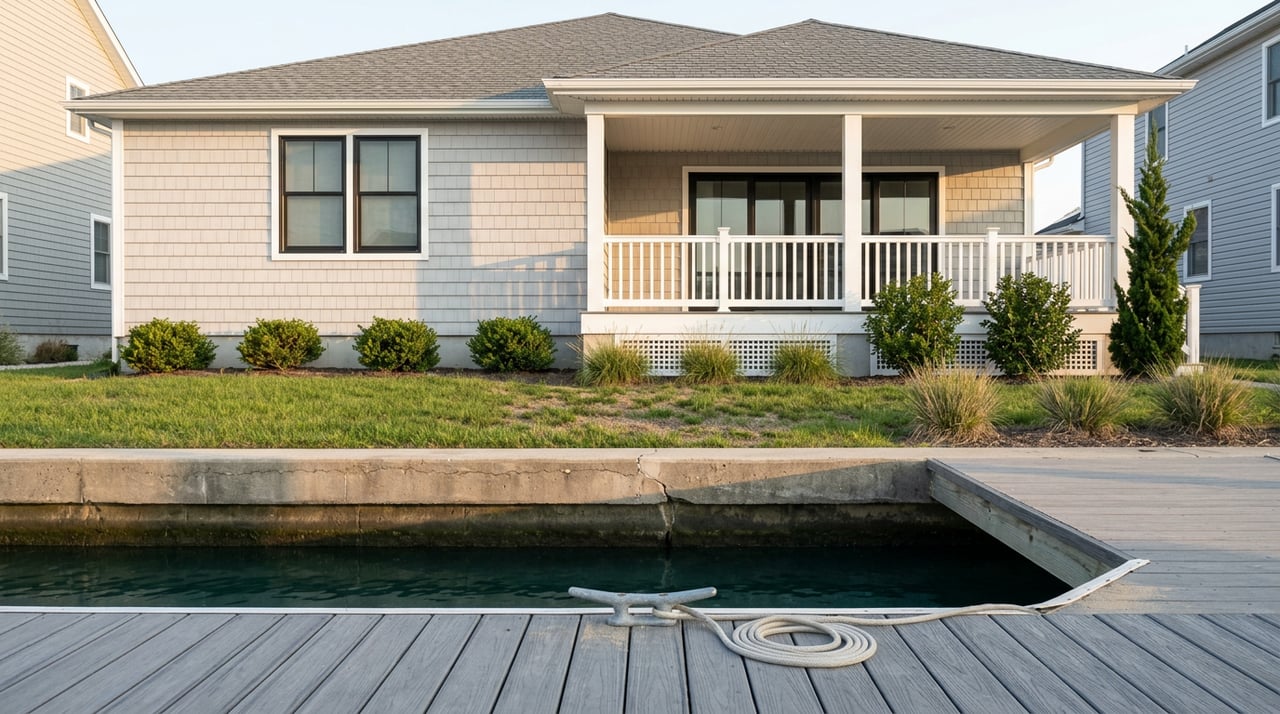
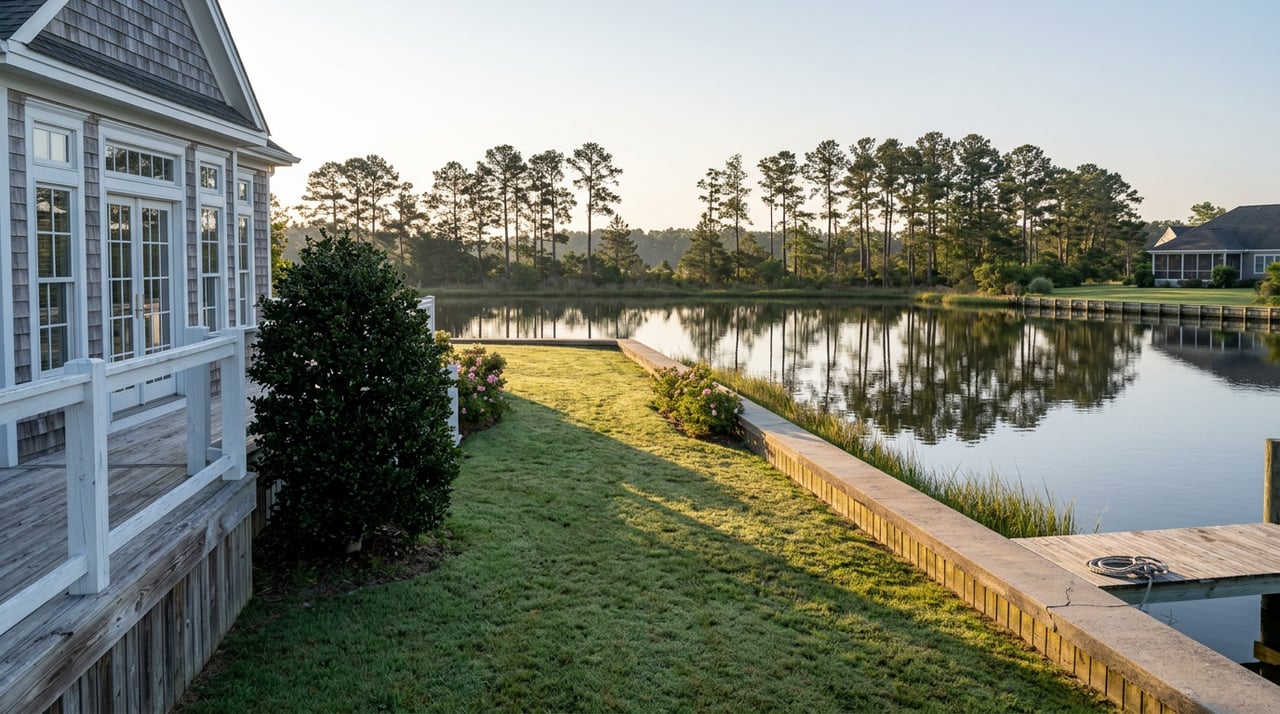
Ocean Pines is governed by the Ocean Pines Association, the second-largest HOA in Maryland, overseeing roughly 8,400 platted lots across a community established in 1968 with more than nine miles of waterfront and 3,000 acres of wooded land. Every property owner pays into it. There's no opting out because you rent the place out, use it three weekends a year, or never touch the golf course.
For the fiscal year that began May 1, 2026, the board approved a $40 increase to the base assessment, which now breaks out by lot classification like this:
| Lot Classification | FY2026-27 Annual Assessment |
|---|---|
| Wooded or Golf | $915 |
| Non-Bulkhead Water | $1,005 |
| Non-Waterfront Estate | $1,373 |
| Waterfront Bulkhead | $1,580 |
| Waterfront Estate | $2,370 |
That's a $1,455 spread between the cheapest tier and the most expensive, and it's all coming out of the same association covering the same general services. The base figure funds roads, drainage, parks, and public safety, including the community's own fire and police departments. Public safety alone accounts for 42 percent of that number, according to figures presented at the board's January budget session.
What the Assessment Doesn't Touch
Here's where the base number starts to look smaller than it feels. Golf, pools, the Beach Club, the marina, and racquet sports are not included. Ocean Pines runs its amenities à la carte, which means you buy access separately, and for 2026 that adds up fast:
- Beach Club parking runs $250 a year for residents and property owners, $600 for non-residents, $50 for a single day, or $170 for the week
- Daily pool access is $13 for adults and $11 for youth ages 5 to 17 for members and residents, with kids 4 and under free
- Golf memberships went up $100 for individuals and $150 for families this cycle
- Swim memberships rose about 5 percent, racquet sports dues climbed $5 to $10 depending on category, and boat slip rates increased 3 percent for residential slips and 5 percent for commercial ones
None of that is optional in the sense that you can negotiate it away. It's optional in the sense that a wooded-lot owner who never sets foot on the golf course pays $915 and stops there, while a waterfront buyer who wants the marina, the pool, and a golf membership is stacking several hundred dollars a year on top of a base that's already the highest tier.
The Second Association Nobody Mentions First
The base OPA assessment isn't necessarily the last bill either. Several sections inside Ocean Pines run their own secondary associations with their own governing documents, architectural review, and separate dues on top of what OPA charges. The sections most likely to carry this extra layer include The Parke, Teal Bay, Pintail Isle, Wood Duck Isle I, Wood Duck II, Whitetail Sanctuary, The Point, and Colonial Village.
The Parke carries the highest additional dues of the group. It's a 55-plus community within Ocean Pines, and its association fees run well above the base OPA assessment, on top of it rather than instead of it. A buyer comparing a Parke listing to a similarly priced wooded lot elsewhere in the community isn't comparing two versions of the same cost structure. They're comparing a single assessment to a stacked one, and the listing price alone won't tell you which is which.
Where the $40 Actually Went
The board's January 24 budget vote passed unanimously, with director Stuart Lakernick absent, and it wasn't an arbitrary bump. Of the $40 increase, $15 offsets Worcester County's rise in water and wastewater bills, and $25 funds construction of the Ocean Pines Volunteer Fire Department's new south-side station. The broader capital plan for the fiscal year allocates more than $6 million, which also covers the third phase of a major golf course irrigation overhaul.
The Yacht Club's better year in food and beverage helped offset what could have been a steeper increase. The main bar there finished renovations on February 27, 2026, and by April the association was reporting a $400,000 favorable variance year to date, with staff careful to note that favorability isn't the same as surplus since much of it is already earmarked for the next assessment cycle and ongoing capital projects. Bocce court maintenance wrapped March 11, a day ahead of the March 12 season opener, which is a small detail but a useful one. It shows an association that's tracking its spending closely enough to know exactly what a restaurant's margin is worth to every homeowner's bill.
Why This Actually Matters When You're Comparing Listings
Over the twelve months ending July 2026, Ocean Pines saw 348 closed sales at a median price of $424,000, with a quarter of sales closing at or below roughly $360,000 and a quarter at or above roughly $555,000. The full range ran from about $204,000 to $2,175,000, and the median time on market was 29 days. A decade earlier, in the twelve months ending July 2016, the median was closer to $217,000. The community has roughly doubled in value over that stretch.
That's a wide price range for one HOA-governed community, and the assessment structure is a big part of why. A $360,000 wooded lot and a $555,000 waterfront bulkhead lot aren't just different price points. They're different assessment tiers, different amenity math, and potentially different secondary-association obligations. When two listings land at similar prices, the question worth asking isn't just what the home costs. It's which of the five assessment tiers the lot falls into, whether the section carries a secondary association, and how much of the amenity package you'd actually use versus pay for out of habit.
Questions Worth Asking Before You Write an Offer
- Which assessment tier does this specific lot fall under, wooded, non-bulkhead water, waterfront bulkhead, or one of the estate categories
- Does this section carry a secondary association, and if so, what are its current dues
- Which amenities does the current owner actually pay for, and which would you realistically use
- Has the section's assessment or secondary dues changed in the last two fiscal years, and by how much
None of these show up on a standard listing sheet. They show up when you ask, or when someone who tracks the OPA's board meetings asks for you.
If you're weighing a wooded lot against a waterfront one, or trying to figure out what a Parke listing actually costs once its secondary dues are added in, Timothy Dozier can walk through the real numbers for the specific section you're considering before you write an offer.